
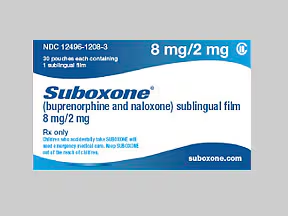
Suboxone® film 8mg/2mg (30 films)
$200.00
Free shipping on orders over $50!
- Satisfaction Guaranteed
- No Hassle Refunds
- Secure Payments
Description
Suboxone Withdrawal Symptoms
Suboxone (buprenorphine/naloxone) is used to treat opioid dependence, but it still interacts with opioid receptors in the brain.
Because of this, stopping it—especially suddenly—can lead to withdrawal symptoms, even though it is a treatment medication.
Withdrawal occurs because the brain has adapted to the presence of buprenorphine and must readjust once it is reduced or removed.
Suboxone Withdrawal Symptoms
Withdrawal symptoms vary depending on dosage, duration of use, and tapering method.
Common Symptoms
- Muscle aches
- Anxiety or restlessness
- Irritability
- Insomnia
- Sweating
- Fatigue
- Cravings
Emotional and Cognitive Effects
- Mood swings
- Difficulty concentrating
- Low motivation
- Feelings of unease
How Long Does Suboxone Withdrawal Last?
Withdrawal timelines vary, but generally follow a predictable pattern:
Early Phase (1–3 days after reduction/stopping)
- Anxiety begins
- Sleep disturbances
- Mild physical discomfort
Peak Phase (3–7 days)
- Strongest symptoms
- Muscle pain and fatigue
- Irritability and cravings
Subacute Phase (1–3 weeks)
- Gradual reduction of physical symptoms
- Emotional instability may persist
Protracted Symptoms (weeks to months in some cases)
- Low mood
- Mild cravings
- Sleep irregularities
Is Suboxone Withdrawal Severe?
Compared to full opioid withdrawal, Suboxone withdrawal is often:
- Less intense physically
- Longer in duration
- More emotionally persistent
This is because buprenorphine has a long half-life and strong receptor binding.
However, severity varies widely between individuals.
Why Suboxone Still Causes Dependence
Even though Suboxone is used to treat opioid addiction, it can still cause physical dependence because:
- It activates opioid receptors (even partially)
- The brain adapts to its presence
- Long-term use changes neurotransmitter balance
Important distinction:
Dependence ≠ addiction
Dependence = physiological adaptation
Addiction = compulsive misuse behavior
Safe Suboxone Tapering
Medical tapering is the safest way to reduce withdrawal severity.
Common taper strategies include:
- Gradual dose reduction over weeks or months
- Micro-dose stepping (very small reductions)
- Medical supervision during discontinuation
Attempting to stop suddenly increases the risk of:
- Strong withdrawal symptoms
- Relapse to stronger opioids
- Psychological distress
Suboxone vs Full Opioid Withdrawal
| Feature | Suboxone Withdrawal | Full Opioid Withdrawal |
|---|---|---|
| Intensity | Moderate | Often severe |
| Duration | Longer | Shorter |
| Cravings | Persistent | Strong acute cravings |
| Physical pain | Moderate | Often intense |
Who Experiences Stronger Withdrawal?
Withdrawal tends to be more difficult for individuals who:
- Used Suboxone long-term
- Took higher doses
- Stopped abruptly instead of tapering
- Have prior opioid dependence history
Managing Suboxone Withdrawal Safely
Medical supervision is strongly recommended. Support strategies may include:
- Gradual tapering schedules
- Sleep support strategies
- Hydration and nutrition support
- Psychological counseling
- Monitoring for relapse risk
Key Takeaway
Suboxone withdrawal can occur when the medication is reduced or stopped, especially after long-term use. While generally less severe than full opioid withdrawal, it can last longer and include both physical and emotional symptoms.
Safe tapering under medical supervision significantly reduces withdrawal severity and supports long-term recovery stability.
Related products
-

FAROXY 15mg (Oxycodone)
Price range: $450.00 through $2,250.00Select options This product has multiple variants. The options may be chosen on the product page -

-

-

Raw DMT Powder
Price range: $325.00 through $1,300.00Select options This product has multiple variants. The options may be chosen on the product page
Reviews
There are no reviews yet.